AI Infrastructure Map
How the AI economy is constrained by physical infrastructure, semiconductor supply chains, cloud platforms and power availability.

RCS Research Initiative
World System Lab explores the coupled dynamics of economy, technology, infrastructure and society through multi-layer system models.
Not a crystal ball.
A structural intelligence system for possible futures.
Currently in concept development. First system maps in preparation.
The Problem
Energy affects industry.
Industry affects trade.
Trade affects inflation.
Inflation affects politics.
Politics affects investment.
Investment affects technology.
Technology affects labor.
Labor affects society.
Most organizations still analyze these domains separately.
We do not lack data. We lack integrated system models.
See how the layers interact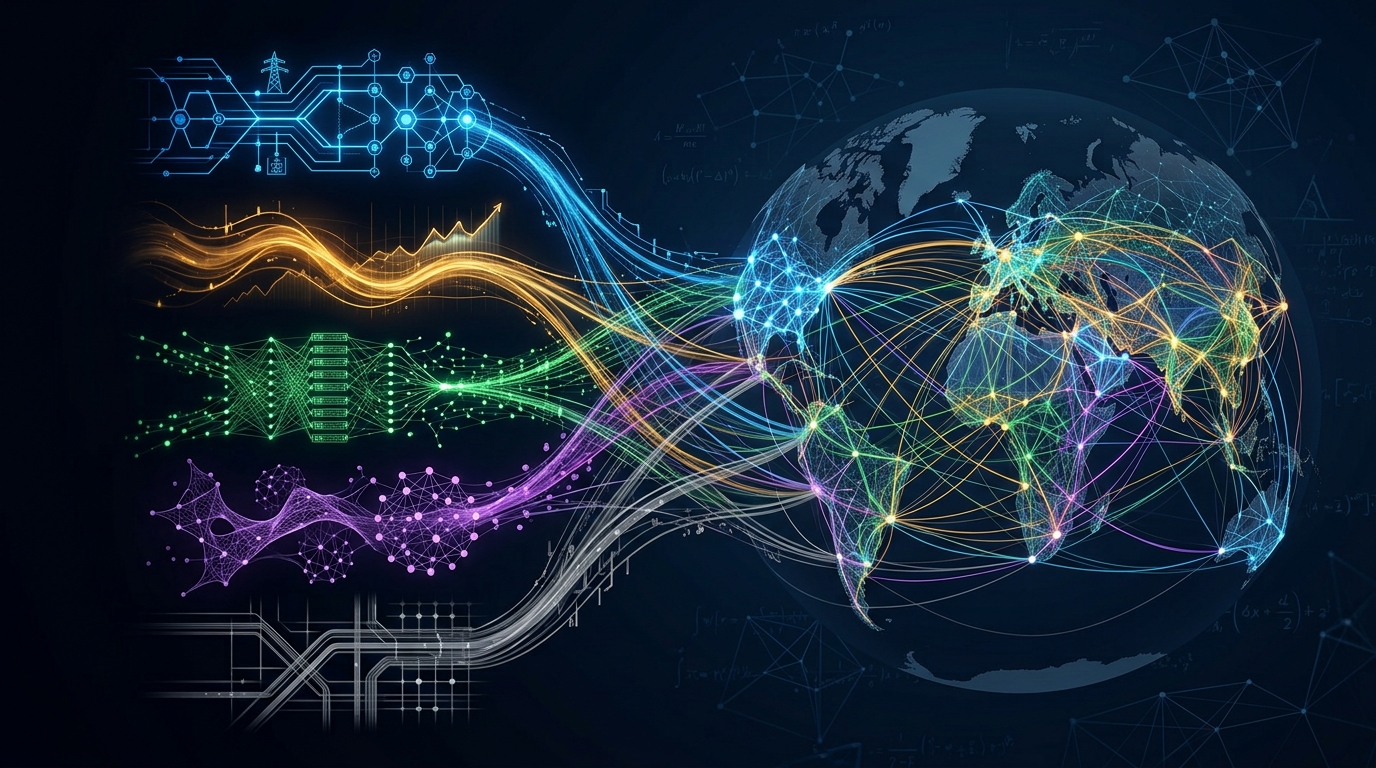
The Shift
Dashboards show indicators.
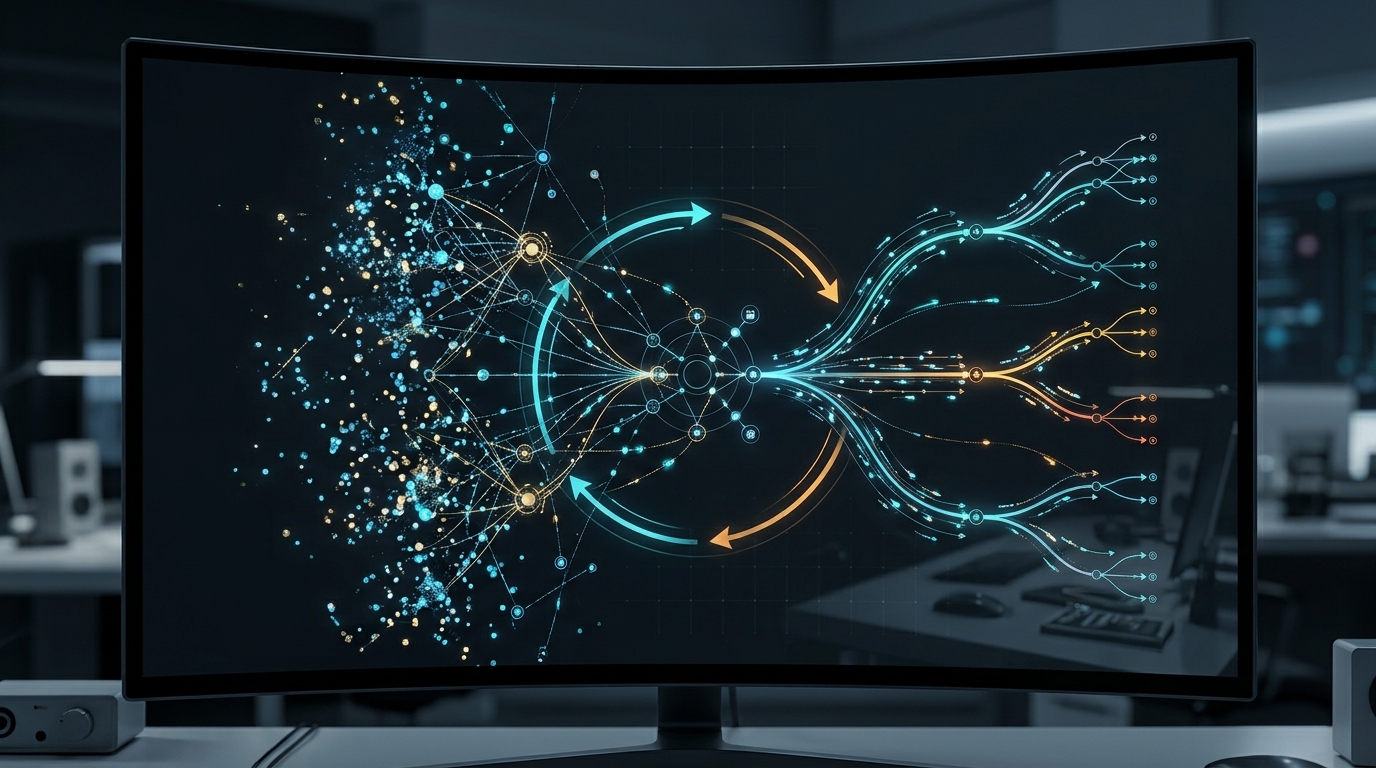
World models reveal interactions.
Most dashboards show what changed.
World models explore why systems move, how feedback loops interact, where constraints emerge and which trajectories become possible under different assumptions.
The goal is not another report. The goal is a model of the system behind the report.
The Method
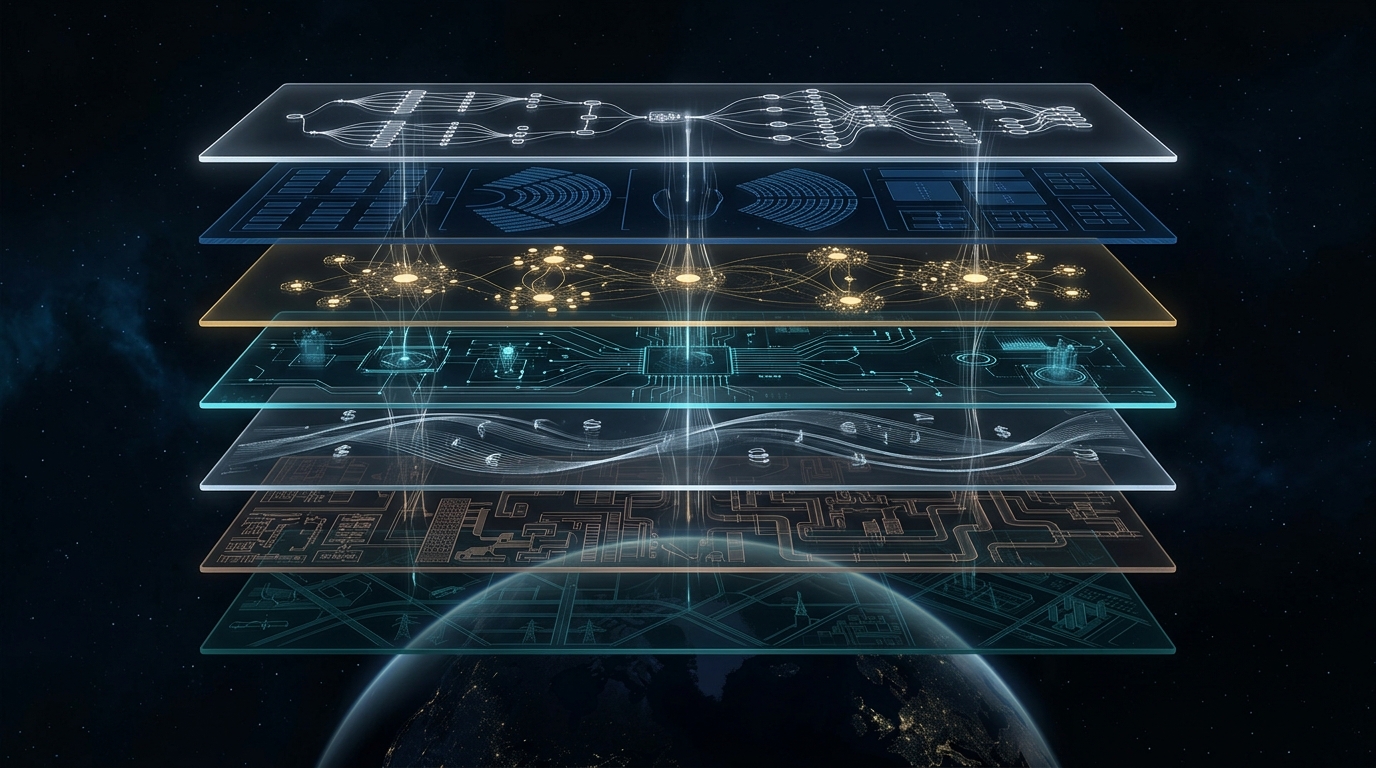
World System Lab models global dynamics as interacting layers.
Physical systems, industrial capacity, economic flows, technological infrastructures, social behavior, political decisions and strategic interventions are not separate domains.
Each layer has its own dynamics. The relevant behavior emerges between them.
Cascade Dynamics
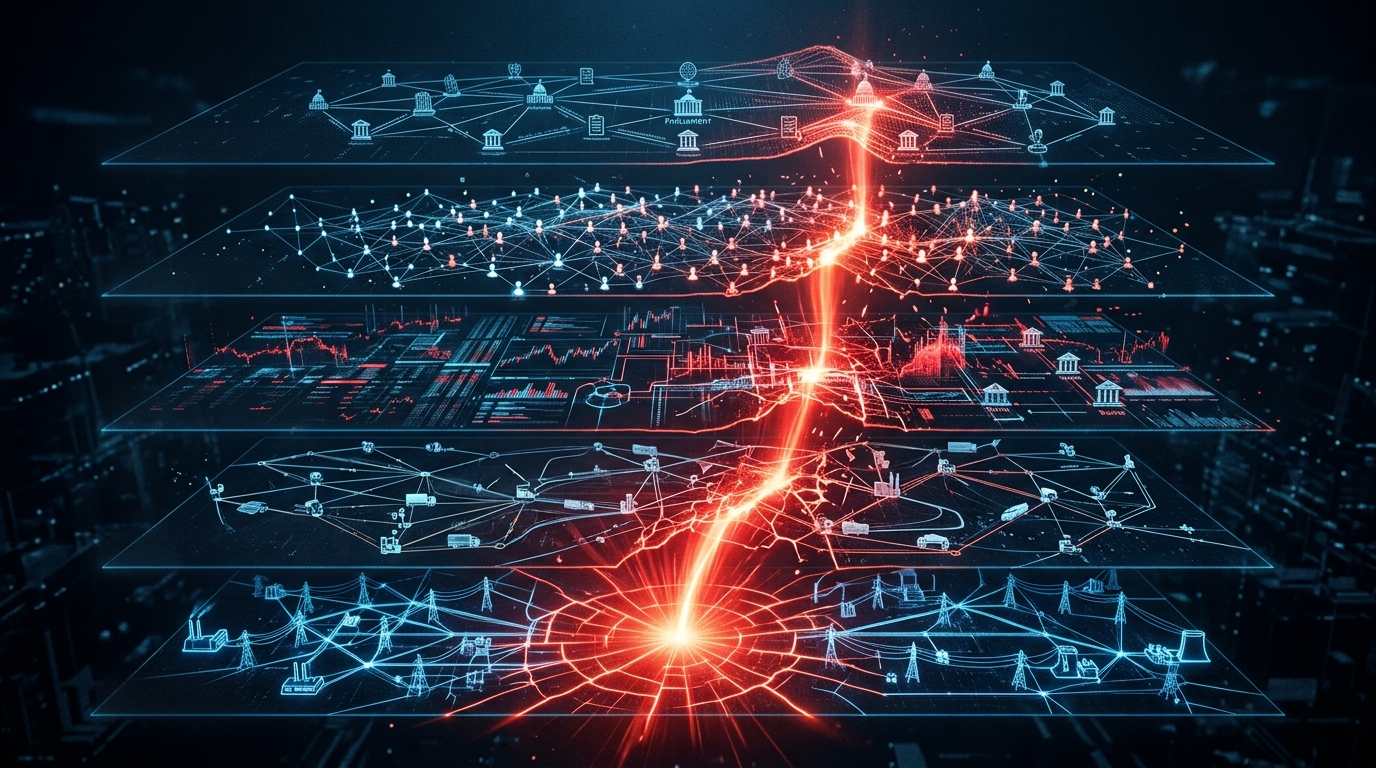
A shock in one layer becomes a constraint in another.
Energy shocks, supply bottlenecks, financial stress, infrastructure failures or policy decisions rarely remain isolated.
They move through coupled layers, change incentives, create secondary effects and reshape the space of possible decisions.
This is why shocks must be modeled as system events, not isolated incidents.
Scenario Space
Not predicting the future. Mapping the space of possible futures.
World System Lab does not predict one future.
Complex systems rarely move along a single forecast path. They branch, stabilize, collapse, adapt or shift into new regimes depending on constraints, feedback loops and interventions.
The future is not a line. It is a structured possibility space.

First Maps
World System Lab begins with focused system maps. Each map connects actors, constraints, flows, feedback loops and decision points into a working representation of the system.
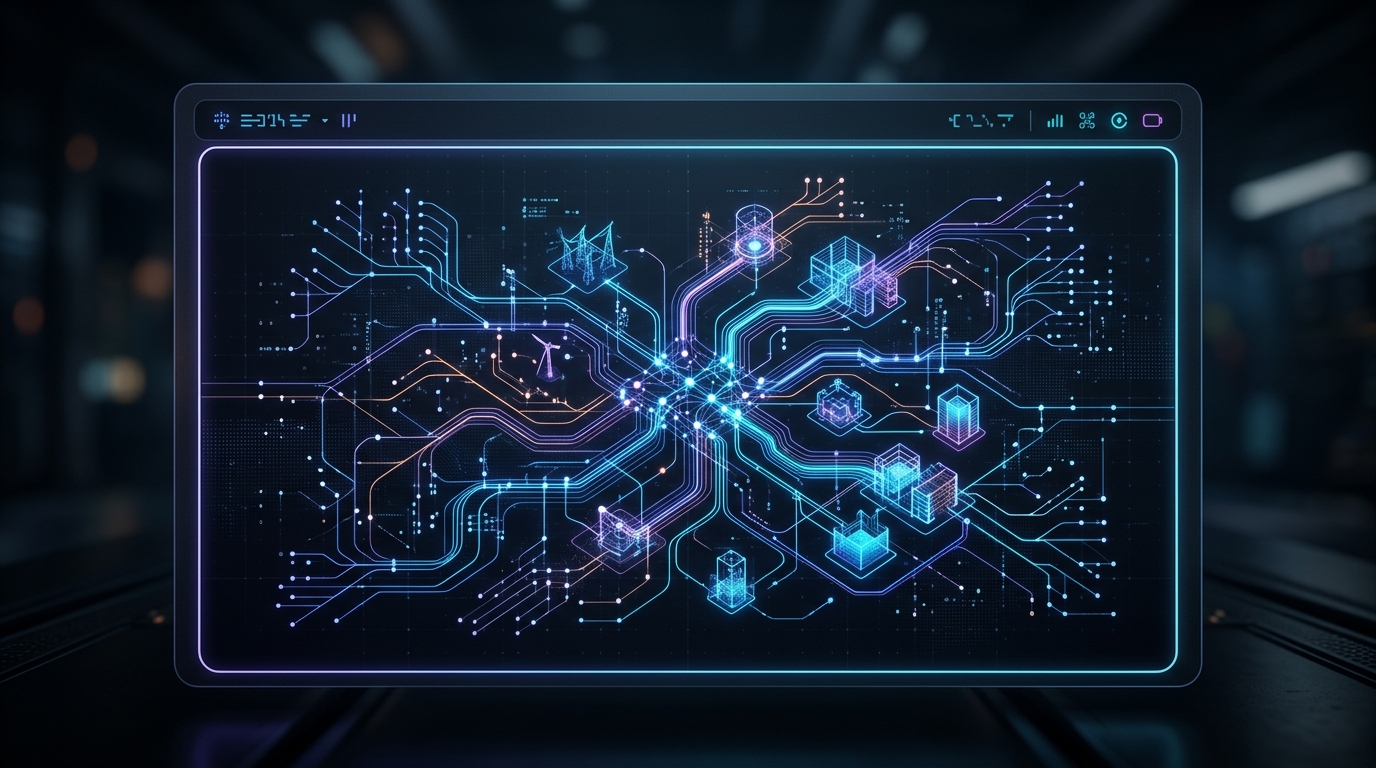
How the AI economy is constrained by physical infrastructure, semiconductor supply chains, cloud platforms and power availability.
How energy systems evolve under infrastructure constraints, price signals, policy decisions and new demand from electrification and compute.
How bottlenecks move through industrial value chains and reshape cost structures, timing and strategic options.
How technological waves move from hype to deployment, standardization, overinvestment or structural change.
Maps in preparation. The first modules are designed as concept maps, research notes and future scenario frameworks.
Built by RCS
World System Lab is developed by Renner Complex Systems.
RCS works at the intersection of modeling, simulation, data science, industrial systems and strategic technology analysis.
The objective is not to replace human judgment with a universal oracle. The objective is to improve judgment by making system structure, feedback, constraints and possible trajectories visible.
Contact
World System Lab is currently in concept development. The first system maps will focus on AI infrastructure, energy transition dynamics, industrial bottlenecks and technology diffusion.
For collaboration, research discussions or early access to the first system maps, contact RCS.